
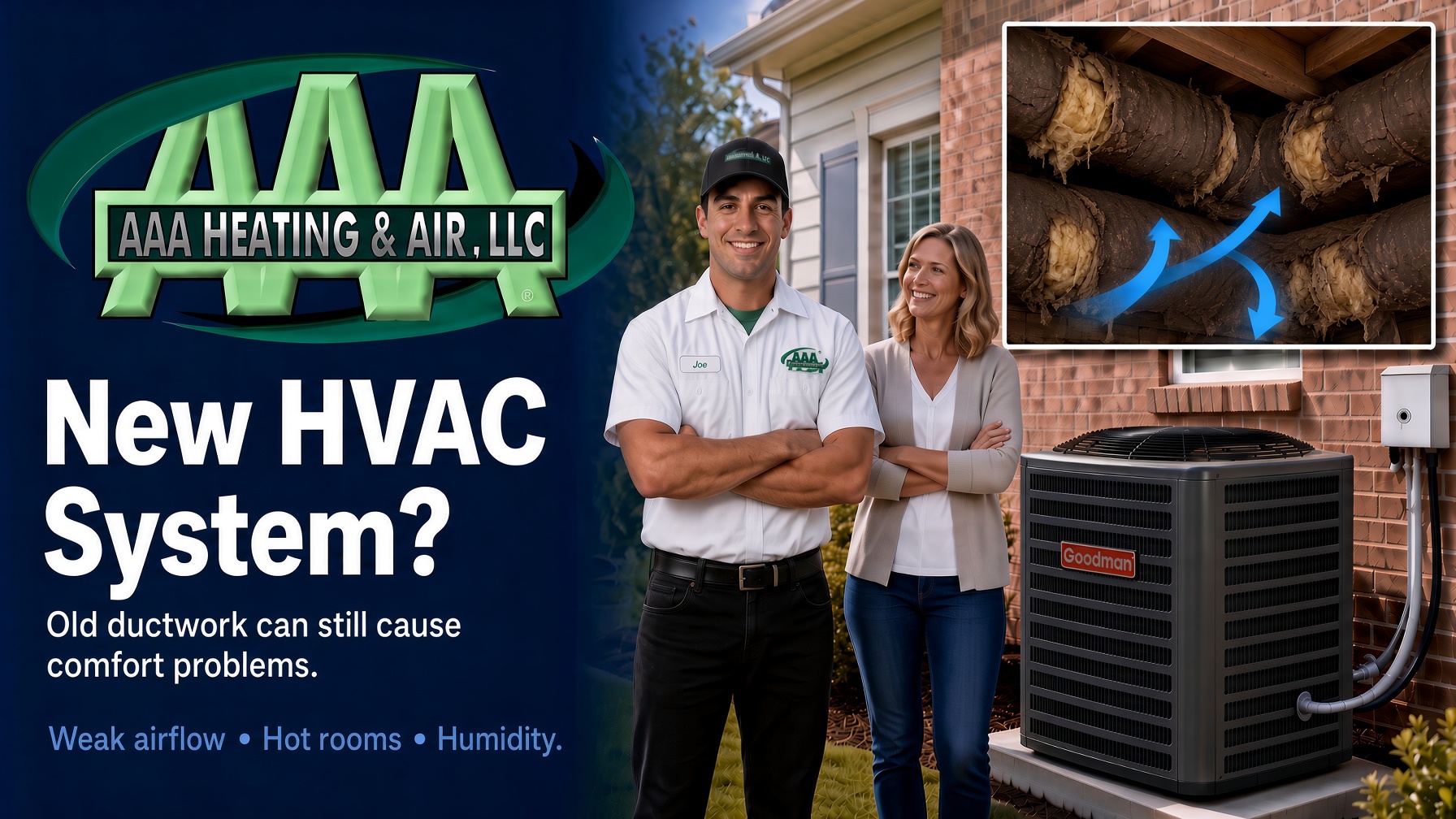
Ductwork • HVAC Replacement • Midlands Home Comfort
Why a New HVAC System May Not Fix Comfort Problems If the Ductwork Is Old
A new heating and cooling system can be a major improvement, but if the ductwork is leaking, damaged, undersized, or poorly insulated, homeowners may still have hot rooms, weak airflow, humidity problems, and high energy bills.
Direct Answer
A new HVAC system may not fix comfort problems if the old ductwork cannot deliver conditioned air properly. In Midlands homes, old ducts may leak into attics or crawlspaces, pull in hot or humid air, restrict airflow, lose cooling through poor insulation, or fail to move enough air to the rooms that need it. Before replacing HVAC equipment, homeowners should ask whether the ductwork has been inspected, because the system and ductwork must work together to solve comfort problems.
AAA Heating & Air, LLC. serves homeowners across the South Carolina Midlands, including Columbia, West Columbia, Lexington, Irmo, Chapin, Cayce, Gilbert, and nearby approved service-area communities.
The Problem: New Equipment Cannot Overcome Bad Air Delivery
When a homeowner replaces an old HVAC system, the expectation is simple: the house should feel better. Rooms should cool more evenly. Airflow should improve. Humidity should be easier to manage. Monthly energy use should become more predictable. The new system should feel like a real upgrade.
But the HVAC unit is only part of the comfort system. The ductwork is how conditioned air gets from the equipment to the rooms. If the ducts are old, leaking, crushed, disconnected, undersized, poorly insulated, or poorly designed, the new system may produce conditioned air but fail to deliver it where the homeowner needs it.
That is why some homeowners are disappointed after replacement. The equipment may be new, but the air delivery system may have become the weak link.
Customer-Centric Bottom Line
If your home has hot rooms, weak airflow, high humidity, musty odors, high energy bills, or uneven comfort, do not assume replacing the outdoor unit alone will solve everything. A customer-centered HVAC replacement conversation should include the ductwork, airflow, insulation, return air, room-to-room comfort, and humidity control. Otherwise, the homeowner may pay for new equipment while comfort problems persist.
Why Ductwork Matters So Much in Midlands Homes
South Carolina homes face a demanding comfort environment. The Midlands has long cooling seasons, high humidity, hot attics, crawlspaces, pollen, dust, storm debris, and heavy summer runtime. Ductwork often runs through unconditioned spaces where heat and moisture can affect system performance.
If ducts run through a hot attic, cooled air may gain heat before it reaches the room. If ducts run through a damp crawlspace and have leaks, the system may pull in humid, dusty, or musty air. If ducts are crushed or disconnected, certain rooms may never receive enough airflow. If returns are undersized, the system may struggle to breathe.
The result is familiar to many homeowners: the thermostat says the system is running, but the home still does not feel right.
1. Leaky ducts
Conditioned air can escape into attics, crawlspaces, garages, walls, or other areas before it reaches the living space.
2. Poor insulation
Ducts in hot or humid areas can lose cooling performance if they are not properly insulated or protected.
3. Weak airflow
Crushed, undersized, dirty, disconnected, or poorly supported ducts can reduce the air reaching certain rooms.
4. Humidity problems
Leaky return ducts can pull humid air into the system, making the home feel sticky even when the equipment is running.
How Old Ductwork Can Undermine a New HVAC System
The new system may be making cool air, but the rooms are not receiving it
A new system can condition air at the equipment, but if the ducts leak or restrict airflow, that air may not reach the rooms in the right volume. Homeowners may still feel weak airflow at vents, hot bedrooms, uneven upstairs comfort, or rooms that never seem to catch up.
The system may run longer than expected
If conditioned air is escaping into the attic or crawlspace, the system has to run longer to satisfy the thermostat. That can reduce comfort, increase wear, and keep utility bills higher than expected even after new equipment is installed.
Humidity may remain a problem
Humidity control depends on the system moving air properly and running under the right conditions. If ducts are pulling humid air from a crawlspace, garage, attic, or wall cavity, the new system may struggle to keep the home feeling dry and comfortable.
The wrong duct size can create pressure problems
Ductwork that is too small, poorly laid out, or missing enough return air can create airflow restrictions. That can make a new system louder, less efficient, harder to balance, and more likely to have comfort complaints.
Old ductwork may be dirty, damaged, or poorly supported
Over time, ducts can sag, tear, separate, collect debris, lose insulation, or become damaged by moisture, animals, storage activity, or age. Replacing equipment without inspecting the ducts can miss one of the biggest causes of poor comfort.
Planning a new HVAC system?
Before you replace the equipment, let AAA Heating & Air evaluate whether old ductwork, weak airflow, leakage, or poor insulation may keep the new system from delivering the comfort you expect.
Signs Your Ductwork Should Be Checked Before Replacing HVAC Equipment
Not every HVAC replacement requires duct replacement. But every serious comfort conversation should consider the ductwork. If the home already has airflow or comfort issues, the ducts should not be ignored.
- Some rooms stay hot while others feel comfortable.
- Airflow is weak at certain vents.
- The upstairs gets hot every afternoon.
- The home feels humid even when the AC is running.
- The HVAC system runs a long time but comfort still feels poor.
- There are musty odors when the system runs.
- The crawlspace or attic has damaged, sagging, or disconnected ducts.
- Energy bills are high compared with comfort results.
- Dust seems excessive or returns look dirty quickly.
- The home has had additions, renovations, room changes, or closed-in spaces.
A New HVAC System and Old Ductwork Can Be a Bad Match
Modern HVAC equipment is designed to operate with proper airflow. If old ductwork cannot provide that airflow, the new system may not perform as intended. That can affect comfort, noise levels, efficiency, humidity control, and system life.
This is especially important when replacing older equipment with newer, more efficient systems. Efficiency ratings assume the equipment is installed and operating under appropriate conditions. Poor duct design can reduce the real-world comfort benefit a homeowner receives.
The practical point is simple: the equipment and ductwork should be evaluated as one system. If the air delivery system is failing, replacing only the equipment may leave the homeowner frustrated.
Ductwork Replacement
If old ductwork is leaking, damaged, poorly insulated, or restricting airflow, duct replacement may be part of the real comfort solution.
HVAC Replacement
When replacing the HVAC system, ask whether the ducts, returns, airflow, and humidity control are being evaluated at the same time.
Indoor Air Quality
If old ductwork is contributing to humidity, dust, musty odors, or poor air movement, indoor air quality options may also need to be discussed.
What a Proper Ductwork Evaluation Should Consider
A ductwork evaluation should be practical and specific. The goal is not to create a bigger project automatically. The goal is to determine whether the existing ducts can support the comfort result the homeowner expects from new HVAC equipment.
Airflow to each room
Rooms with weak airflow should be identified before new equipment is installed. If a room already has poor air delivery, the replacement system may not solve the issue without duct changes.
Return air capacity
The system must be able to pull enough air back through the return side. Undersized or poorly located returns can make the system noisy, inefficient, and less effective.
Leaks and disconnections
Duct leaks can waste conditioned air and pull in unwanted air from attics, crawlspaces, garages, or wall cavities. Disconnected ducts can leave entire rooms underserved.
Insulation and location
Ducts in hot or humid areas need appropriate insulation and protection. Otherwise, comfort and efficiency can suffer before air reaches the living space.
Overall system design
Equipment size, duct size, return air, airflow, zoning, room layout, and humidity control should work together. Replacing equipment without considering the full design can leave the homeowner with avoidable problems.
Safe Homeowner Checks Before You Call
These checks are safe observations. Do not crawl through unsafe attic or crawlspace areas, cut into ductwork, remove electrical panels, disturb insulation, or work around wiring, pests, standing water, or damaged building materials.
- Walk room to room and note which areas are hottest or weakest at the vents.
- Check that supply vents and return grilles are open and not blocked.
- Listen for whistling, rattling, or loud airflow that may point to pressure issues.
- Notice whether the home feels sticky even when the AC is running.
- Look for visible duct damage only from a safe, accessible location.
- Write down whether comfort problems are worse upstairs, in additions, over garages, or in rooms far from the air handler.
- Check whether the filter gets dirty unusually fast.
- Ask whether the ductwork was inspected before any equipment replacement quote.
What Homeowners Should Not Do
Do not close multiple vents to force more air into another room. Closing vents can increase pressure in the duct system and may create new airflow problems.
Do not assume a bigger HVAC system will fix weak ductwork. Oversized equipment can short cycle, reduce humidity control, increase comfort swings, and fail to solve the real delivery problem.
Do not attempt duct repair in unsafe crawlspaces, attics, or areas with excessive heat, electrical hazards, moisture, pests, or damaged materials. Ductwork may look simple from the outside, but poor repair methods can create leakage, restriction, condensation, and code concerns.
Do not approve a replacement quote without asking whether airflow and ductwork were evaluated. If the home already has comfort problems, the ducts should be part of the conversation.
Need the ductwork checked before replacing HVAC equipment?
AAA Heating & Air can evaluate ductwork, airflow, returns, equipment sizing, humidity concerns, and comfort complaints so you can make a smarter replacement decision.
Questions to Ask Before Buying a New HVAC System
A homeowner should be comfortable asking direct questions before investing in a new system. These questions help protect the customer from buying equipment without solving the full comfort problem.
- Was the ductwork inspected?
- Are any ducts leaking, crushed, disconnected, undersized, or poorly insulated?
- Is there enough return air for the new system?
- Will this system solve my hot rooms, or is ductwork also needed?
- Could old ductwork cause humidity problems after replacement?
- Will the new system be sized based on the home, not just the old equipment?
- Are there ductwork repair or replacement options that should be compared?
- What comfort results should I realistically expect if I replace equipment but keep the existing ducts?
Frequently Asked Questions
Can old ductwork make a new HVAC system perform poorly?
Yes. If old ductwork is leaking, crushed, undersized, poorly insulated, or disconnected, a new HVAC system may still struggle with hot rooms, weak airflow, humidity, noise, and high energy bills.
Should I replace ductwork when I replace my HVAC system?
Not always. But the ductwork should be inspected before replacement. If the ducts are damaged, leaking, poorly insulated, or not sized correctly, duct repair or replacement may be needed to get the comfort improvement you expect.
Why are some rooms still hot after a new HVAC system?
Hot rooms after replacement can point to duct leakage, poor airflow, undersized or poorly placed returns, attic heat, insulation issues, zoning needs, or duct design problems. The equipment may not be the only issue.
Can duct leaks make my home feel humid?
Yes. Leaky return ducts can pull humid air from crawlspaces, attics, garages, or wall cavities into the system. That can make the home feel sticky even when the AC is running.
Will a bigger HVAC system fix weak airflow?
Usually not. If the ductwork is restricted, leaking, or poorly designed, a larger system can create new problems and may still fail to deliver air properly. Airflow problems should be diagnosed before equipment is selected.
When should I call AAA Heating & Air?
Call when you are planning HVAC replacement and already have hot rooms, weak airflow, high humidity, musty odors, noisy ducts, high energy bills, or comfort problems that may involve old ductwork.
Final Recommendation
Do not replace the equipment and ignore the air delivery system.
A new HVAC system can be a smart investment, but only if the home can move conditioned air properly. Before replacing equipment, let AAA Heating & Air inspect the ductwork, airflow, returns, humidity concerns, and comfort complaints so the solution fits the whole home.