
Electrical Division • Standby Generators • Midlands Homes
Whole-Home Generator: What It Takes to Power Everything
Sizing, the transfer switch, your panel, fuel, and yearly upkeep.
Direct Answer
A whole-home generator can run everything in your house during an outage, not just a few chosen circuits. Getting there takes four things done right. The generator has to be sized to your home’s biggest electrical loads running together. A whole-house transfer switch has to tie it safely into your panel. It needs a fuel supply that holds up through a long outage. And it needs yearly maintenance so it actually starts when the lights go out.
AAA Heating & Air’s Electrical Division serves homeowners across the South Carolina Midlands, including Columbia, West Columbia, Cayce, Lexington, Irmo, Chapin, and nearby communities.
Why Whole Home Instead of a Few Circuits
Many standby generators are set up to cover essentials only: the refrigerator, some lights, the furnace blower, the well pump. That works, and for some families it is the right call. But a winter outage in the Midlands rarely announces how long it will last. After the first evening, a lot of households find they miss the oven, the dryer, a hot shower, and heat in every room.
A whole-home setup means nobody has to decide which part of the house goes dark. The kids do homework at the kitchen table. Someone cooks a real supper. Grandma’s room stays as warm as the den. Life inside feels like a normal Tuesday while ice ticks on the windows.
Still choosing between essential circuits and whole-home coverage? Our post on generator installation for storm season covers that choice, and our El Niño winter generator post covers planning for a stormy season.
Sizing: The Big Loads Decide It
The generator’s size is set by the handful of appliances that pull the most power. In most homes, those are:
- Heat pump and heat strips. A heat pump is the outdoor unit that heats and cools your home. On very cold mornings it gets help from heat strips, which are electric backup coils inside the indoor unit. Those coils draw a lot of power when they come on.
- Electric water heater. It heats a full tank at a time, and it pulls hard while it does.
- Electric range and oven. Several burners plus the oven add up fast at suppertime.
- Electric dryer. One of the heavier loads in the house whenever it runs.
- Well pump. If your water comes from a well, the pump runs every time someone opens a tap or flushes.
Motors pull a short burst of extra power the moment they start, often several times what they use once running. Your heat pump’s compressor (the motor that moves heat in and out) and well pump both do. If the heat pump and the well pump kick on at the same moment the water heater is already running, the generator has to handle that spike without stalling or dropping the house.
That is why square footage alone can’t size a whole-home generator. A load calculation is a room by room, appliance by appliance tally of what you have, how much each one draws, and what is likely to run at the same time. Our electricians size the generator from a load calculation done for your home, not a rule of thumb.
The Transfer Switch and Your Panel
A whole-house transfer switch is the device that safely switches your home from utility power to the generator. It also keeps generator power from feeding back onto the utility lines, which protects the line crews working to get power restored.
With an automatic transfer switch, the power goes out, the switch senses it, and the generator starts on its own. Once it runs steadily, the switch moves your whole house over to it. When utility power comes back and holds, the switch moves the house back and the generator cools down and shuts off. You never step outside in the rain.
For whole-home coverage, the transfer switch has to be sized to handle the whole house.
This is also where your electrical panel comes in. The panel is the gray box with breakers that sends power to every circuit in the house. If the panel is older, full, or showing wear, it may need attention before a whole-home generator goes in. Sometimes the bigger question is your service, meaning the line and equipment that bring power from the utility into your home. Our electricians check your panel and service before sizing anything, and will tell you if an upgrade belongs in the plan.
We covered how panel age and capacity affect new equipment in our guide to upgrading your panel before new HVAC equipment. A post on what happens on panel upgrade day is coming soon.
Fuel: What Reliable Means in a Long Outage
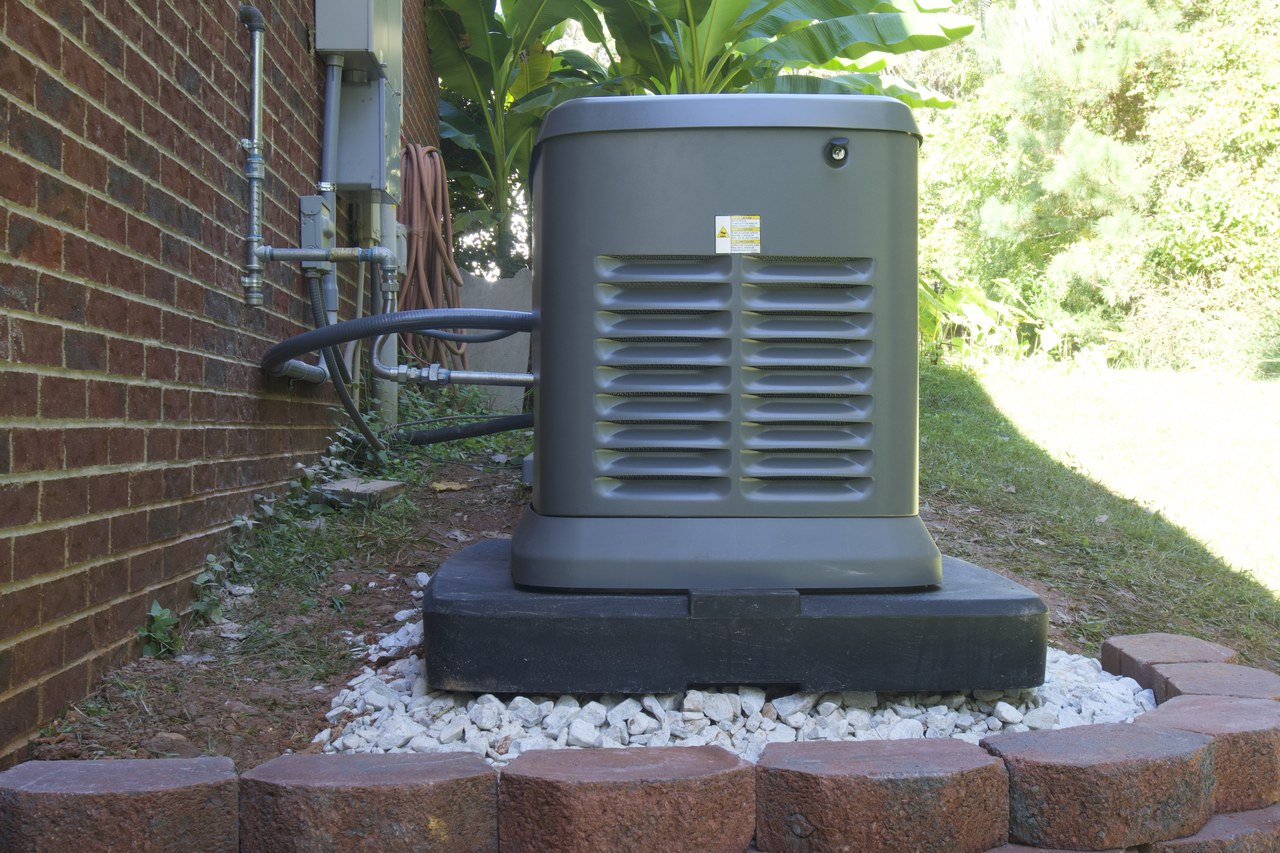
Standby generators run on natural gas or propane. The difference shows up in a long outage.
Natural gas comes through the same line that may already feed your furnace, water heater, or stove. As long as gas service keeps flowing, you don’t refill anything, though no utility service is guaranteed through every kind of storm.
Propane is stored in a tank on your property. That gives you independence from a gas line, but the tank is your limit. How long it lasts depends on tank size and how hard the house is drawing power, and running everything at once uses more fuel than running a few circuits. Generac says a propane tank feeding one of its home standby generators must be at least 250 gallons, and a larger tank may be needed depending on the installation, how much fuel the house uses, and the climate. The right size keeps fuel pressure steady and gives you more run time if a delivery is delayed. Your propane supplier can confirm the right size for your home.
For propane homes, reliable means planning before the storm. Keep the tank topped up going into winter, know your supplier’s delivery schedule, and remember that delivery trucks can be slowed by the same ice that took the power out. A whole-home generator is only as steady as the fuel behind it.
The Service Side: Why Maintenance Decides Whether It Starts
A standby generator can sit quietly for months, then has to start on demand. Most units are set to run a short automatic test on a regular schedule. During that exercise run the engine starts, warms up, and circulates oil, and the system checks itself. If you hear your generator hum for a few minutes on a regular day and time, that is what it is doing.
A yearly maintenance visit goes further. A technician typically:
- Changes the oil and oil filter
- Tests the battery and checks its terminals
- Replaces the spark plugs
- Replaces the air filter
- Tests the transfer switch to confirm it moves the house over and back
- Checks wiring and fuel connections for looseness, corrosion, or leaks
- Runs a load test where it applies, so the generator proves it can carry real household power
We recommend an annual inspection and tune-up.
A weak battery, old oil, a clogged air filter, or a loose connection can keep a generator from starting. A routine visit catches most of that long before the next storm.
Related YouTube
Our video on how standby home generators work.
Final Recommendation
A whole-home generator is a small system, and every piece has to fit.
When the size, switch, panel, fuel, and maintenance fit together, an outage becomes an evening when the neighbors’ windows go dark and yours stay lit and warm. If you would like help figuring out what your home needs, call (803) 889-0686 to schedule a visit, and we will walk through your house with you.