
Midlands Home Comfort • Heat Pumps • First Cold Mornings
Why Does My Heat Pump Feel Lukewarm on Cold Mornings?
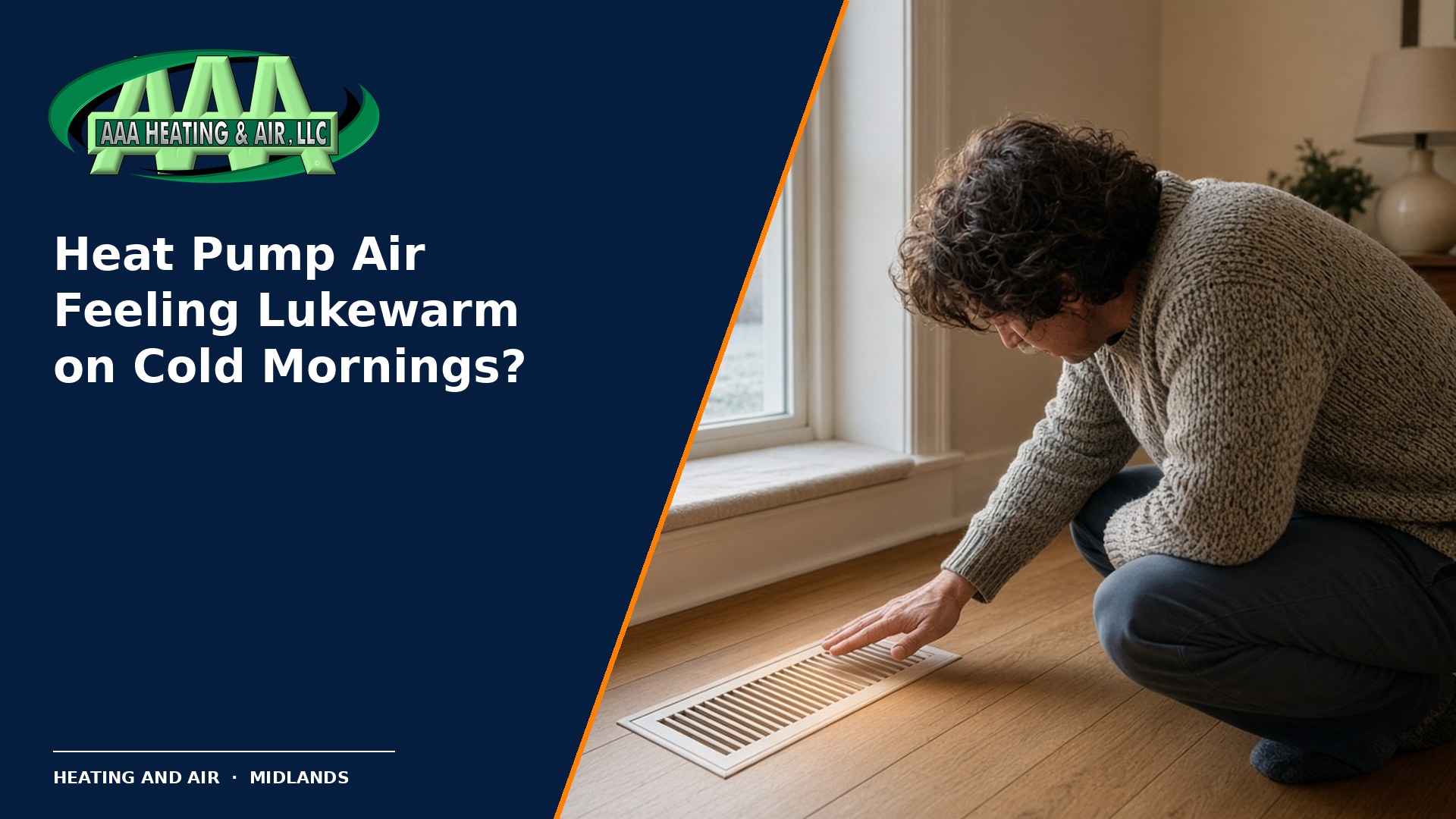
Mild air at the vents and a system that seems to run forever usually mean a heat pump doing its job. Here is how to tell normal from a real problem.
Direct Answer
A heat pump sends out milder air than a gas furnace, so vents can feel lukewarm even when everything works. On cold mornings it also runs longer and now and then switches into a short defrost cycle to melt frost off the outdoor unit. That is normal. Call when the house never reaches the thermostat setting, ice stays on the outdoor unit, the system turns on and off every few minutes, or a breaker trips.
AAA Heating & Air, LLC. serves homeowners across the South Carolina Midlands, including Columbia, West Columbia, Cayce, Lexington, Irmo, Chapin, and nearby communities.
That First Chilly Morning
It happens every fall in Columbia, West Columbia, and Lexington. The first cold morning arrives, someone switches the thermostat to heat, and you hold a hand over the vent: “Shouldn’t that be hotter?” The outdoor unit keeps running. Someone asks if it is broken.
Usually it is not. A heat pump simply heats differently than the furnace many of us grew up with.
How a Heat Pump Heats Your Home
A gas furnace burns fuel to make heat. A heat pump moves heat that is already in the outdoor air into your home, using refrigerant, a fluid that carries heat from outside to inside. It is the same system that cooled your house all summer, running in reverse.
Because there is no flame, the air is gentler. Many heat pumps deliver air somewhere around 90 to 100 degrees, while a gas furnace commonly sends air in the 120 to 140 degree range. Air in the 90s is close to skin temperature, so it can feel mild on your hand while it still warms the room.
The colder it gets outside, the longer it runs to keep up. It is built for long, steady runs rather than short hot bursts.
What Is Usually Normal on the First Cold Mornings
Long runtimes. Every home has a balance point, the outdoor temperature where the heat pump can just barely keep up with the heat the house is losing. Below that point, long or nearly nonstop runs are expected.
Slow catch-up after a big setback. A big overnight thermostat setback leaves a big gap to close in the morning, and a heat pump closes it slowly. Many systems call on auxiliary heat, shown as AUX on the thermostat. That is backup heat that helps when the heat pump cannot keep up alone. In most homes it comes from electric heat strips, which are coils inside the indoor unit that heat up a lot like a toaster. Seeing AUX now and then on a cold morning is normal. A steady setting, or a setback of just a couple of degrees, usually feels better.
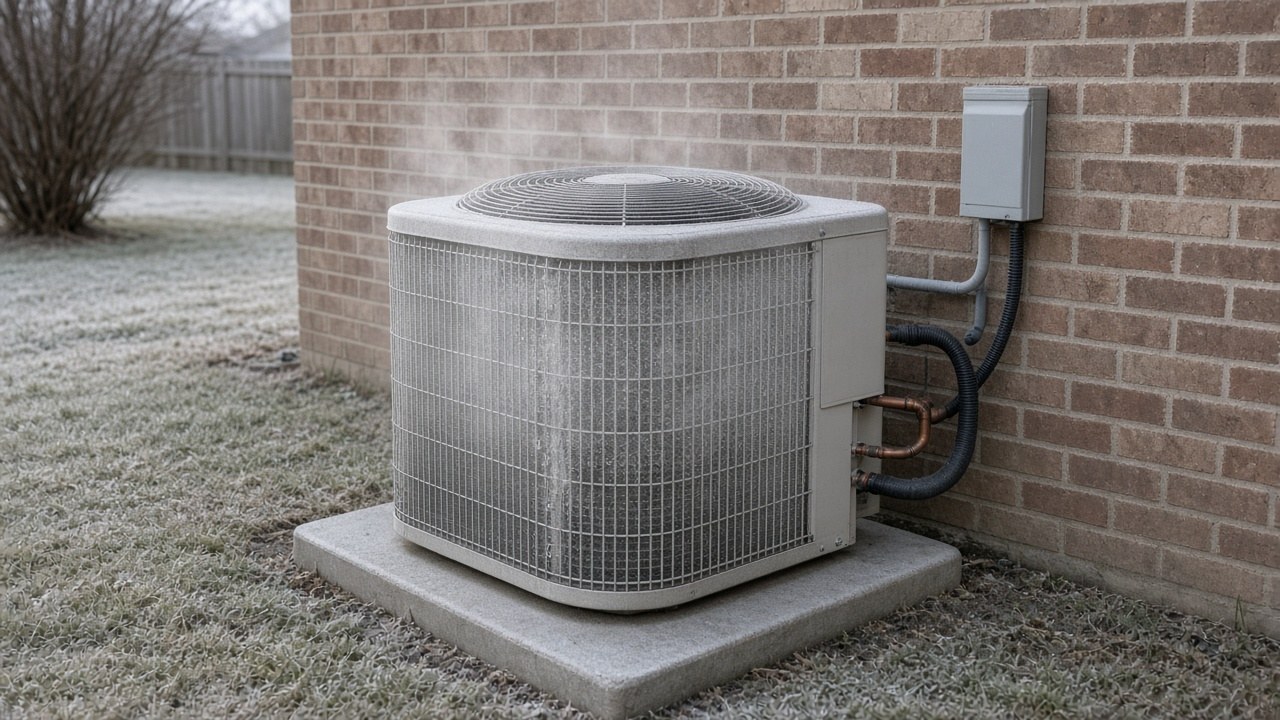
Defrost cycles. In cold, damp weather, frost can build on the outdoor coil (the metal fins wrapped around the outdoor unit). The heat pump clears it with a defrost cycle (a short stretch where the system reverses for a few minutes to warm the outdoor coil and melt the frost). The outdoor fan may stop, you may hear a whoosh, and steam can rise from the unit. That steam is melting frost, not smoke. Indoor air may feel cooler for a few minutes unless the heat strips fill the gap. Heating picks back up on its own.
Signs It Needs a Visit
These signs point to something a technician should look at:
- The house never reaches the setting, or the vents blow truly cool air, not just mild, for long stretches.
- Thick or clear ice stays on the outdoor unit and keeps building instead of clearing after defrost.
- Short cycling, meaning the system turns on and off every few minutes.
- New loud noises such as grinding, screeching, or banging.
- A breaker that trips. Reset it once at most. If it trips again, leave it off and call.
- AUX showing almost all the time, even on mild mornings.
- A room that never catches up after you have checked the filter and vents.
One more note: refrigerant runs in a sealed loop and does not get used up the way gas does in a car. If a system is low, there is usually a leak, or it was not charged correctly at install. The fix is finding the cause, not topping it off. See residential heating and cooling repairs. If only one room lags, our guide on one room that never feels right walks through airflow and duct causes.
Safe Checks You Can Make First
A few quick looks can rule out the simple stuff.
- Thermostat mode. Make sure it is set to Heat (or Auto) and the setting is above the room temperature. A fan set to On blows unheated air between cycles.
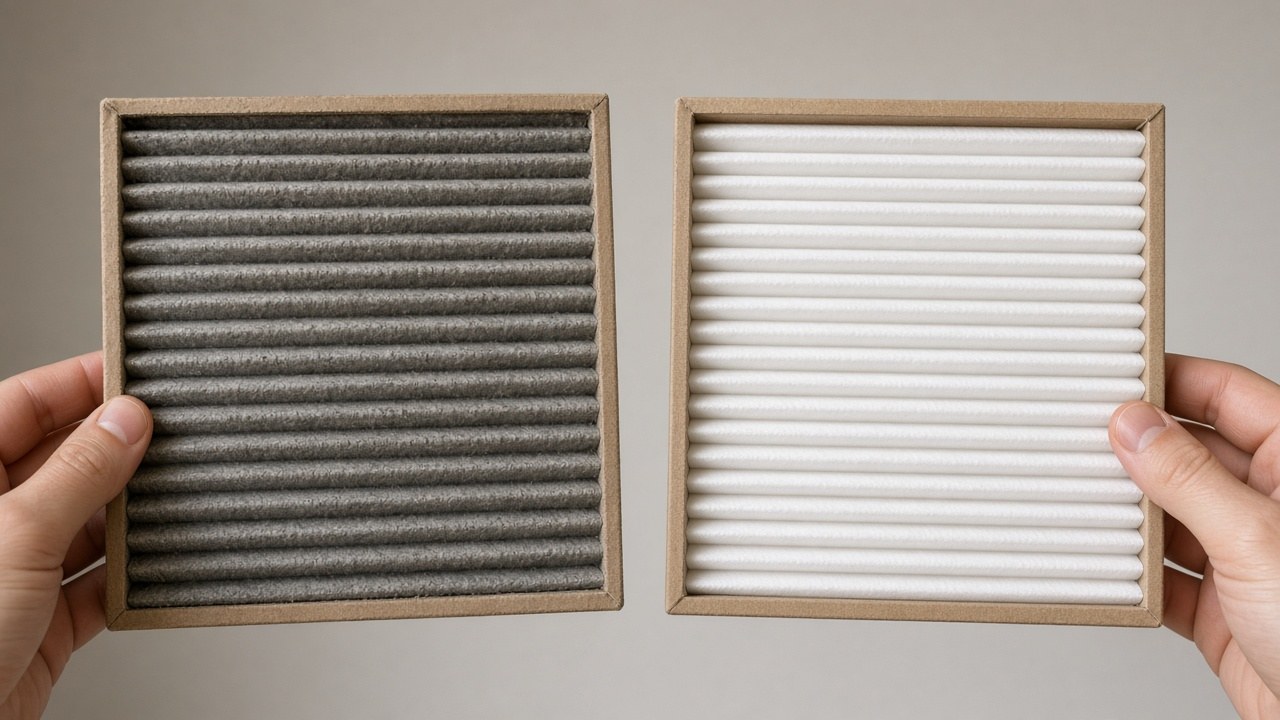
- Filter. If it is gray or packed, replace it with the same size. A clogged filter chokes airflow.
- Vents and returns. Keep supply vents open and furniture off the return grilles (the larger grilles that pull air back to the system).
- Outdoor unit. Clear leaves, pine straw, and stored items from around it. Do not chip at ice or pour water on the coil.
Leave to a technician: anything involving refrigerant, opening the outdoor or indoor unit, electrical panels or wiring, and cleaning the indoor coil. Emergency heat is a thermostat setting that shuts off the heat pump and runs only the backup heat, usually the heat strips. It is a stopgap if the heat pump stops working and costs more to run, so if you need it, call us.
Still Not Sure? We Can Take a Look
If the safe checks did not settle it, you do not have to guess through the cold snap. Call (803) 889-0686 or schedule service. AAA Heating & Air, LLC. can check how your heat pump is running, explain what we find in plain words, and tell you if it is simply working normally. Planning ahead? A seasonal heating and cooling maintenance visit is a calm way to start winter.
Heating Repairs
Ice that will not clear, cool air, or breaker trips? Start here.
Seasonal Maintenance
A planned look at your heat pump before the coldest weeks.
Related: Gas Furnace Owners
Have a furnace instead? See our guide to a heat check before cool nights.
Related YouTube
Heat feeling weak? Watch this short AAA Heating & Air tip on checking your return grilles, one of the safe checks above.
Frequently Asked Questions
Why does my heat pump air feel lukewarm?
Heat pumps move heat instead of burning fuel, so the air is milder than furnace air and can feel lukewarm while still warming the house.
Why is steam coming from my outdoor unit?
Usually a defrost cycle melting frost off the outdoor coil. Call if ice keeps building or heat does not come back.
What does AUX on my thermostat mean?
AUX means backup heat, usually electric heat strips, is helping, often during defrost or a big morning catch-up. If AUX shows almost all the time, have the system checked.
When should I call AAA Heating & Air?
Call (803) 889-0686 when the house will not reach the setting, ice will not clear, a breaker trips, or the filter and vent checks did not help.
Final Recommendation
Mild air on a cold morning is usually a heat pump at work. Now you know the few signs that mean it needs help.
Call (803) 889-0686. AAA Heating & Air, LLC. can check your heat pump, explain what we find, and help keep your whole family warm through a Midlands winter.