
Electrical Division • Home Safety • Midlands Homeowners
Electrical Warning Signs Midlands Homeowners Should Not Ignore
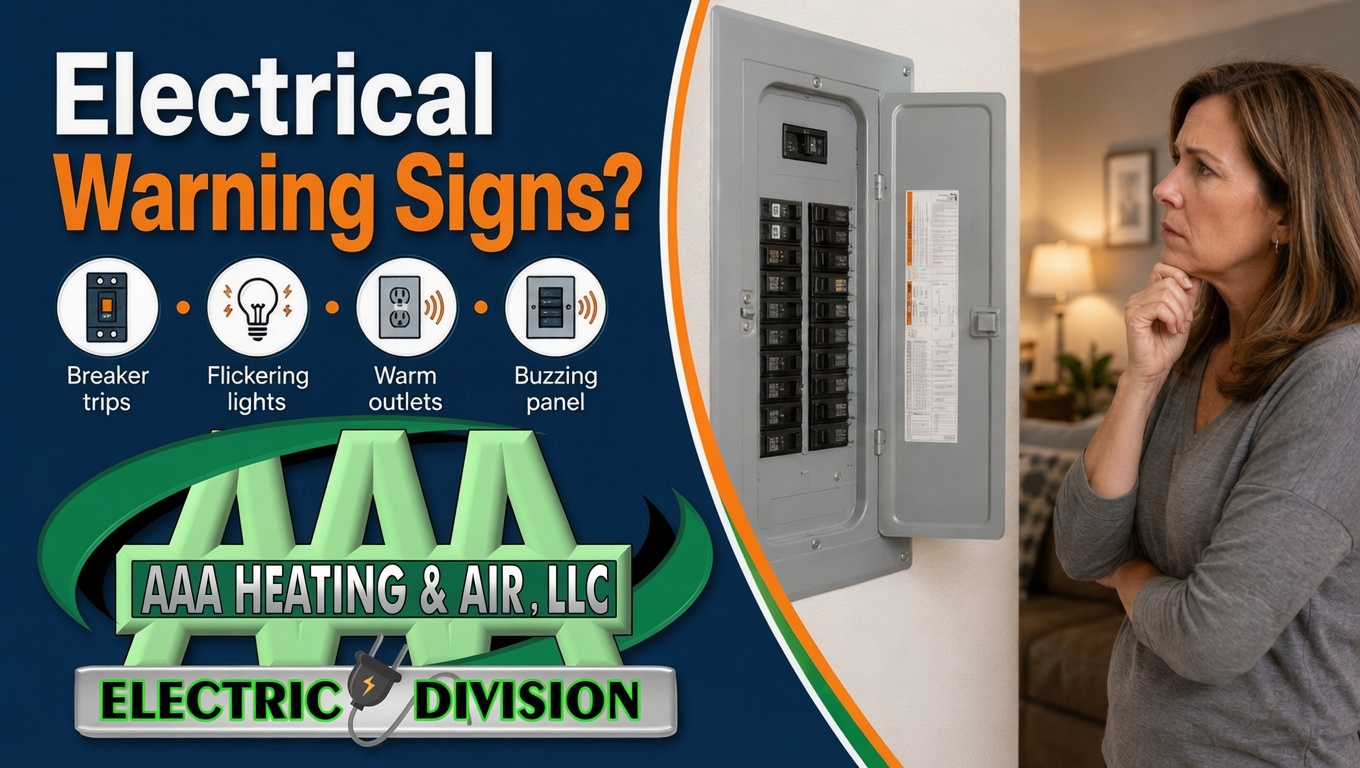
Repeated breaker trips, flickering lights, warm outlets, buzzing panels, and burning smells are not normal household annoyances. They are warning signs that deserve attention.
Direct Answer
If you notice electrical warning signs such as repeated breaker trips, flickering lights, warm outlets, buzzing from the panel, burning smells, scorch marks, or outlets that stop working, do not ignore them. Stop using the affected outlet or circuit when it is safe to do so, avoid repeatedly resetting a tripping breaker, and call AAA Heating & Air’s Electrical Division for residential electrical service.
AAA Heating & Air’s Electrical Division serves homeowners across the South Carolina Midlands, including Columbia, West Columbia, Lexington, Irmo, Chapin, Cayce, and nearby approved service-area communities.
Why Electrical Warning Signs Matter
Most homeowners notice electrical problems as small symptoms first. A breaker trips once. A light flickers. An outlet feels warmer than expected. A panel makes a faint buzzing sound. It may be tempting to dismiss those signs if the power comes back on or the issue seems occasional.
The problem is that electrical warning signs can point to stress inside the circuit, outlet, switch, breaker, wiring, or panel. Sometimes the issue is simple. Other times it may involve loose connections, overloaded circuits, damaged devices, failing breakers, moisture, overheating, or arcing. Those are not problems to guess at.
In Midlands homes, electrical systems also work hard during summer heat, storm season, high HVAC demand, home office use, appliance loads, and generator or EV charger planning. When the electrical system shows signs of strain, the safest response is to identify the cause before the problem gets worse.
1. Repeated breaker trips
A breaker is designed to shut off power when a circuit is overloaded or unsafe. If the same breaker keeps tripping, do not keep resetting it. That pattern needs a proper electrical evaluation.
2. Flickering lights
Lights that flicker when large equipment starts may point to load changes, but frequent or widespread flickering can also indicate wiring, connection, circuit, panel, or utility-side concerns.
3. Warm outlets or switches
Outlets and switches should not feel hot. Warmth, discoloration, crackling, or a burning smell near an outlet can point to overheating or a loose connection.
4. Buzzing from the panel
A buzzing panel, breaker, outlet, or switch should be taken seriously. Electrical buzzing can point to loose connections, arcing, overload, or a failing component.
Common Causes Behind Electrical Warning Signs
Overloaded circuits
An overloaded circuit happens when more electrical demand is placed on a circuit than it is designed to handle. This can happen when multiple high-demand devices are used together, when older circuits are asked to support modern loads, or when a room has more equipment than the original electrical design expected.
Loose or damaged connections
Loose electrical connections can create heat, intermittent power, flickering lights, crackling sounds, or burning smells. Connections can loosen over time from age, vibration, prior work, device wear, or heat cycles. This is one reason a warm outlet or buzzing sound should not be ignored.
Failing breakers or worn components
Breakers and electrical devices do not last forever. A breaker that trips repeatedly may be doing its job, or it may be worn, damaged, or responding to a deeper circuit problem. The important point is that the cause should be identified before the circuit is put back into regular use.
Moisture or storm-related damage
South Carolina storm activity can expose weak points in a home’s electrical system. Moisture near panels, outlets, exterior circuits, crawlspaces, garages, or outdoor equipment should be treated carefully. Water and electricity do not mix.
Older electrical capacity
Many Midlands homes were not originally built for today’s electrical demands. HVAC equipment, appliances, home offices, charging devices, entertainment systems, outdoor equipment, and future EV charger needs can all increase load expectations. If warning signs appear often, the panel, circuits, or electrical layout may need review.
Need help with electrical warning signs?
If your home has repeated breaker trips, flickering lights, warm outlets, buzzing, scorch marks, or burning smells, call AAA Heating & Air’s Electrical Division before the issue becomes a bigger safety concern.
What Homeowners Can Safely Check First
Electrical safety starts with caution. Homeowners should not remove panel covers, open outlets, touch exposed wiring, bypass breakers, tape damaged cords, or continue using equipment that smells hot or looks scorched. However, there are safe observations that can help explain the problem when you schedule service.
- Write down which breaker, outlet, room, or appliance is involved.
- Notice whether the problem happens when a specific appliance or HVAC system starts.
- Stop using outlets, switches, or cords that feel warm, smell hot, spark, crackle, or show discoloration.
- If a breaker trips, reset it only if it is safe and appropriate. If it trips again, leave it off and call for service.
- Keep children and pets away from affected outlets, panels, cords, or equipment.
- Never touch electrical equipment if water, moisture, or storm damage is present.
What Not to Do
Some electrical symptoms seem minor, but the wrong response can increase risk. Do not keep resetting the same breaker to “see what happens.” Do not plug a high-demand appliance into an extension cord as a workaround. Do not cover a warm outlet with furniture. Do not ignore a burning smell just because it fades.
Most importantly, do not treat repeated electrical symptoms as normal. Electrical systems are designed to operate quietly, consistently, and safely. When they stop doing that, the goal is not to force the power back on. The goal is to find the cause.
Schedule Service
Use the service request form when you need help with breaker trips, outlets, switches, lighting, panels, or other residential electrical concerns.
Financing Options
For larger electrical repairs or upgrades, ask about current financing options.
AAA Heating & Air, LLC.
Learn more about the company serving homeowners across the South Carolina Midlands.
How AAA Heating & Air’s Electrical Division Can Help
AAA Heating & Air’s Electrical Division can evaluate residential electrical symptoms and explain practical next steps. Depending on the concern, that may include checking the affected circuit, outlet, switch, breaker, lighting, panel condition, load demand, or visible signs of heat and damage.
The purpose of a professional electrical visit is not to guess from symptoms alone. It is to identify what is happening, explain the risk level, and give the homeowner clear options. That matters when the issue involves electrical safety, comfort equipment, storm readiness, appliances, or future upgrades.
If the concern involves a panel upgrade, breaker issue, outlet problem, lighting concern, or electrical troubleshooting, call AAA Heating & Air’s Electrical Division and let the team help you decide the safest next step.
Frequently Asked Questions
Is it dangerous if a breaker keeps tripping?
A breaker that keeps tripping should be taken seriously. It may be responding to an overloaded circuit, a short, a ground fault, a failing breaker, or another electrical issue. Do not keep resetting it repeatedly.
Why do my lights flicker?
Occasional light changes can happen when major equipment starts, but frequent flickering, widespread flickering, or flickering paired with buzzing, heat, or breaker trips should be checked.
Should an outlet ever feel warm?
An outlet should not feel hot. Warmth, discoloration, crackling, sparks, or a burning smell near an outlet can point to overheating or a loose connection. Stop using that outlet and call for service.
What does a buzzing electrical panel mean?
A buzzing panel may point to a breaker, connection, load, or electrical component problem. Because panel issues can involve serious safety concerns, buzzing should be evaluated promptly.
When should I call AAA Heating & Air’s Electrical Division?
Call when you notice repeated breaker trips, flickering lights, warm outlets, buzzing, burning smells, scorch marks, dead outlets, storm-related electrical concerns, or panel problems.
Final Recommendation
Do not ignore electrical warning signs.
Breaker trips, flickering lights, warm outlets, buzzing panels, burning smells, and scorch marks are signs that your home’s electrical system needs attention. Call AAA Heating & Air’s Electrical Division for clear residential electrical service options.