


HVAC Comfort • Midlands Humidity • AC Performance
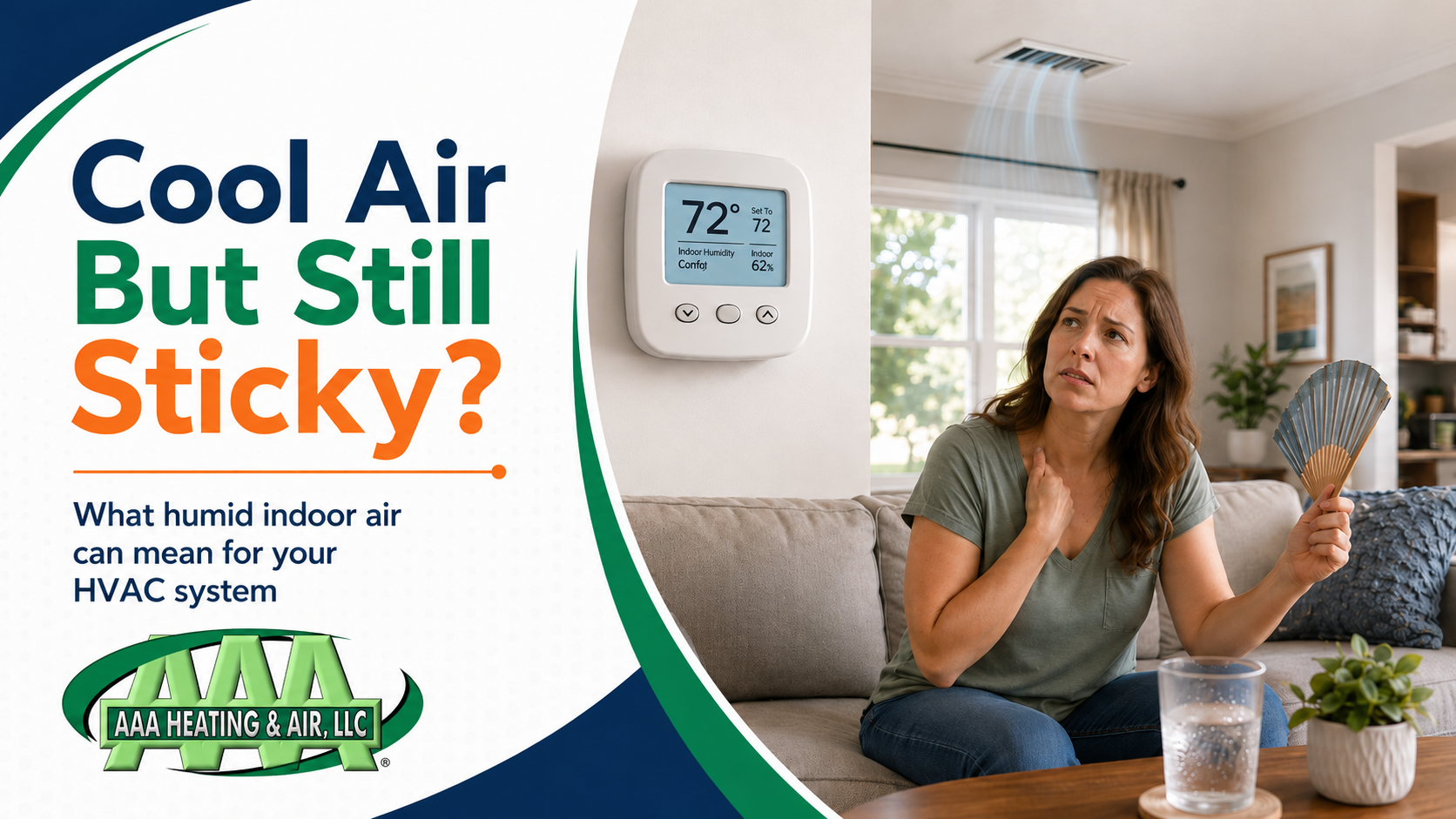
Cool Air But Still Sticky? What Humid Indoor Air Can Mean for Your HVAC System
If your home feels cool but still sticky during a South Carolina summer, your air conditioner may be lowering the temperature without removing enough humidity.
Direct Answer
Cool air with sticky indoor humidity is not something Midlands homeowners should ignore. It can point to airflow problems, dirty coils, duct leakage, short cycling, thermostat fan settings, crawlspace moisture, poor system sizing, or an HVAC system that needs service. Your AC should do more than make the air cold. It should also help remove moisture so your home feels comfortable.
AAA Heating & Air, LLC. serves homeowners across the South Carolina Midlands, including Columbia, West Columbia, Lexington, Irmo, Chapin, Cayce, and nearby approved service-area communities.
Why a Cool House Can Still Feel Humid
Air conditioning is not just about cold air. A properly operating system also helps remove moisture from the air as warm indoor air passes across the cold evaporator coil. That moisture should condense, drain away, and leave the home feeling cooler, drier, and more comfortable.
In the Midlands, that moisture removal matters. Summer humidity, crawlspace moisture, attic heat, older duct systems, pollen, red clay dust, and heavy AC run time can all affect how your home feels. A thermostat may show that the temperature is dropping, but if the indoor humidity stays high, the home can still feel clammy, sticky, or uncomfortable.
That is why “cool but sticky” is a useful warning sign. It often means the system is cooling the air enough to satisfy the thermostat, but something is interfering with humidity removal, air movement, or overall home comfort.
1. The system may be short cycling
If the AC turns on and off too quickly, it may cool the air before it has enough run time to remove moisture. This can happen with certain control issues, sizing concerns, airflow restrictions, or equipment problems.
2. Airflow may be off
Humidity removal depends on proper airflow across the evaporator coil. Dirty filters, blocked returns, dirty blower components, restricted ductwork, or improper airflow settings can affect performance.
3. The evaporator coil may be dirty
A dirty indoor coil can interfere with heat transfer and moisture removal. Dust, pollen, and biological buildup can reduce the system’s ability to condition the air correctly.
4. Duct leakage may be pulling in humid air
Leaky return ducts in a crawlspace, attic, garage, or wall cavity can pull humid, dusty, or hot air into the system. That can make the AC work harder while the home still feels damp.
The Thermostat May Not Tell the Whole Story
A thermostat reading only tells you the air temperature near the thermostat. It does not automatically tell you whether the home is removing humidity properly, whether airflow is balanced, whether ducts are leaking, or whether the system is running long enough to dehumidify.
For many homeowners, the first clue is comfort. You may notice the air feels heavy. Furniture, bedding, or clothing may feel slightly damp. Rooms may smell musty. Windows or supply vents may show condensation. The AC may run, and the air from the vents may feel cool, but the home still does not feel right.
That is the difference between temperature control and comfort control. In Midlands summer weather, your HVAC system has to manage both.
Need HVAC help with sticky indoor air?
If your AC is cooling but your home still feels humid, let AAA Heating & Air inspect the system, airflow, coils, ductwork, and comfort conditions before the problem gets worse.
Common HVAC Causes of Sticky Indoor Air
Dirty air filter
A dirty filter can restrict airflow. When airflow is restricted, the system may struggle to move enough air across the coil. That can reduce comfort, increase strain, and in some cases contribute to coil freezing. If your home feels humid and the filter has not been changed recently, this is one of the first safe homeowner checks.
Thermostat fan set to “ON” instead of “AUTO”
When the fan is set to “ON,” the blower may continue moving air even when the outdoor AC cycle is not actively cooling. In some homes, that can make the air feel more humid because moisture on the coil or in the cabinet may be pushed back into the living space. In most homes, “AUTO” is the better setting for normal cooling operation.
Dirty indoor coil
The evaporator coil is where heat and moisture removal happen. If the coil is dirty, the system cannot transfer heat as efficiently. That can reduce cooling performance, affect humidity removal, and make the home feel less comfortable even when cold air is coming from the vents.
Ductwork problems
Leaky, damaged, disconnected, undersized, or poorly insulated ductwork can create major comfort problems. If ducts are pulling in humid crawlspace or attic air, the AC may cool part of the home while constantly fighting moisture entering from outside the conditioned space.
Refrigerant or heat-transfer issues
If the system is not transferring heat properly, the coil temperature and cooling cycle may be affected. Refrigerant issues require a trained HVAC technician. Homeowners should not try to add refrigerant or diagnose sealed-system problems themselves.
System sizing or equipment age
An oversized system may cool the air quickly but fail to run long enough to remove humidity properly. An older or struggling system may run often but still fail to control comfort. Either condition should be evaluated before assuming the thermostat setting is the problem.
What Homeowners Can Safely Check First
Before calling for service, there are a few safe checks that may help you identify a simple issue. Do not open sealed equipment panels, handle refrigerant, bypass controls, or continue running the system if you see ice forming.
- Check whether the thermostat fan is set to AUTO, not ON.
- Check the air filter and replace it if it is dirty.
- Make sure supply vents and return grilles are open and not blocked by furniture, rugs, or curtains.
- Look for visible ice on the refrigerant line or indoor coil area. If you see ice, turn the system off and call for service.
- Notice whether one area of the home feels more humid than another. That can point toward ductwork, airflow, insulation, or building-envelope concerns.
- Pay attention to musty smells, condensation, water around the indoor unit, or repeated drain issues.
When Sticky Air Becomes a Bigger Problem
High indoor humidity is not only a comfort issue. Over time, excess moisture can contribute to musty odors, condensation, poor indoor air quality, dust mite concerns, and stress on the HVAC system. It can also make homeowners lower the thermostat more than necessary because the air still feels uncomfortable.
That matters because lowering the thermostat does not always solve a humidity problem. If the system is not removing enough moisture, setting the temperature lower may increase run time without addressing the root cause. The better path is to find out why the system is not controlling humidity properly.
AAA Heating & Air can evaluate the AC system, air filter, blower operation, evaporator coil condition, drain performance, ductwork, airflow, and comfort symptoms so you have clear options before deciding what to do next.
HVAC Repair
If your system is running but not controlling comfort, an HVAC repair visit can help identify airflow, coil, refrigerant, blower, drain, or control issues.
HVAC Maintenance
Routine maintenance helps keep coils, airflow, drains, electrical components, and system performance under review before comfort problems become more serious.
Ductwork
If duct leakage or airflow imbalance is part of the issue, ductwork evaluation may help explain why certain rooms feel sticky, hot, or uncomfortable.
Could Indoor Air Quality Equipment Help?
Sometimes the AC system is operating properly, but the home still has humidity, filtration, or air quality concerns because of the building itself. Crawlspace moisture, attic air leakage, poor ventilation, older ductwork, and heavy seasonal humidity can all contribute.
In those situations, indoor air quality options may be worth discussing after the HVAC system itself has been checked. The right solution depends on what is actually causing the comfort problem. That may involve filtration, air purification, ductwork corrections, dehumidification strategy, maintenance, or equipment recommendations.
You can learn more about AAA Heating & Air’s indoor air quality services here: Indoor Air Quality Services.
Frequently Asked Questions
Why does my house feel sticky even though the AC is running?
Your AC may be cooling the air without removing enough moisture. Common causes include short cycling, dirty filters, dirty coils, airflow problems, duct leakage, thermostat fan settings, or equipment sizing concerns.
Should I lower the thermostat to remove humidity?
Lowering the thermostat may make the system run longer, but it does not always solve a humidity problem. If airflow, ductwork, coil condition, or system performance is the issue, the root problem still needs to be checked.
Can a dirty air filter make my home feel humid?
Yes. A dirty filter can restrict airflow and reduce HVAC performance. In some cases, airflow restrictions can also contribute to frozen coils or system strain.
Can ductwork cause sticky indoor air?
Yes. Leaky return ducts, damaged ductwork, poor insulation, or ducts running through humid crawlspaces and hot attics can affect indoor humidity and comfort.
When should I call AAA Heating & Air?
Call when your home feels sticky even with cool air, humidity stays high, rooms feel uneven, you notice musty odors, the system short cycles, you see ice, or the AC cannot keep the home comfortable.
Final Recommendation
Do not ignore cool air that still feels sticky.
In Midlands summer weather, humidity problems can point to airflow issues, dirty coils, duct problems, drain issues, system sizing concerns, or HVAC repair needs. Let AAA Heating & Air inspect the system and explain your options clearly.