


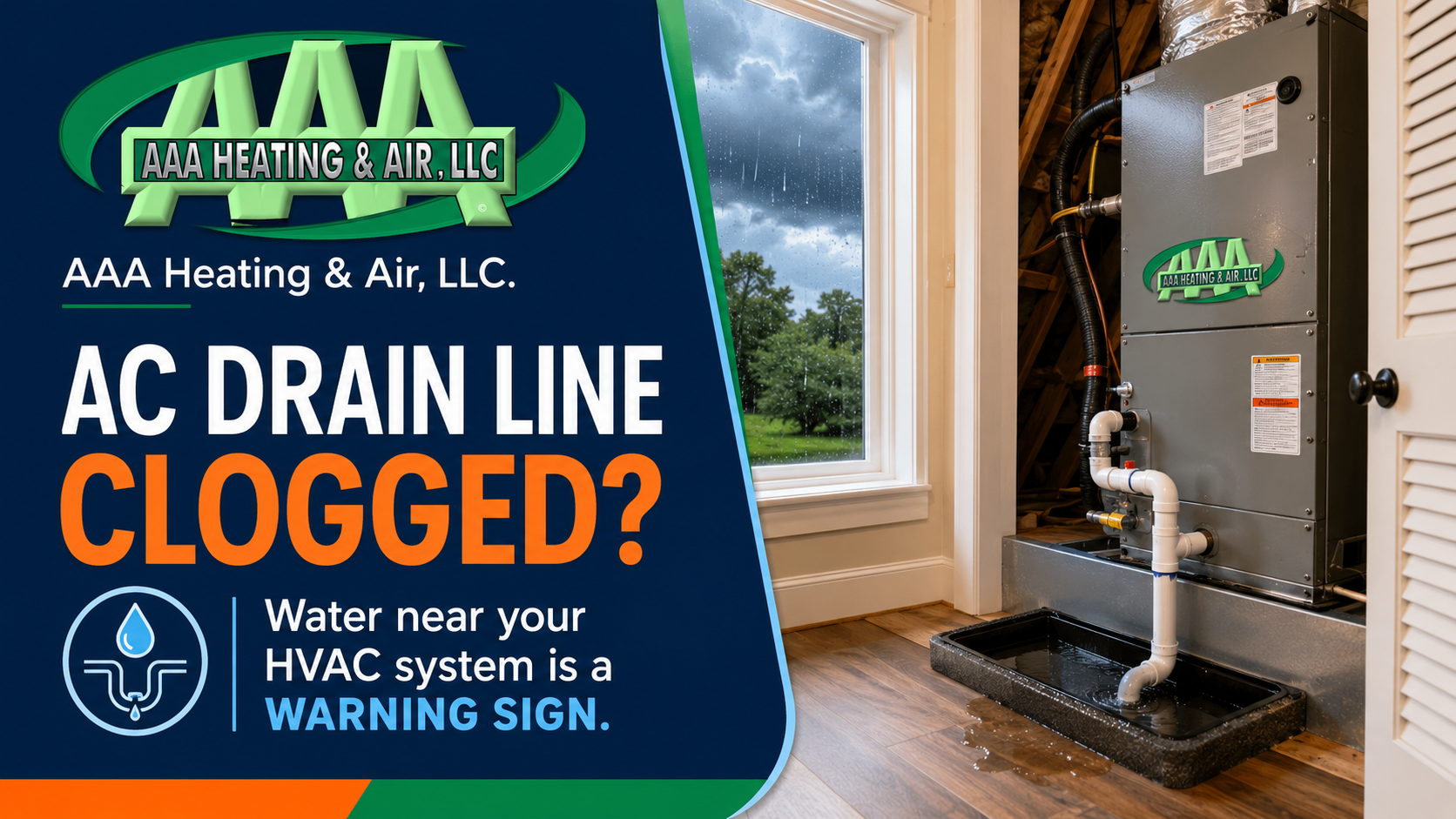
HVAC Repairs • Condensate Drain Lines • Midlands Storm Season
AC Drain Line Clogged After Midlands Storms? What Homeowners Should Know
When humidity climbs and thunderstorms move through the Midlands, your air conditioner may pull a lot of moisture out of the air. That water has to drain somewhere.
Direct Answer
If your AC drain line is clogged, water that should leave the HVAC system can back up into the drain pan, leak near the indoor unit, create musty odors, raise indoor humidity, or trigger a safety switch that shuts the system off. After humid Midlands storms, this problem can show up quickly because your AC is removing more moisture from the air. If you see water around your HVAC system, a full drain pan, ceiling stains, or an AC that suddenly stops cooling, call AAA Heating & Air for HVAC service.
AAA Heating & Air, LLC. serves homeowners across the South Carolina Midlands, including Columbia, West Columbia, Lexington, Irmo, Chapin, Cayce, Gilbert, and nearby approved service-area communities.
Why This HVAC Problem Matters
Today, August 4, 2026, the forecast for Columbia and West Columbia shows a humid, storm-interrupted day with thunderstorms possible late morning and during the afternoon. That type of weather can make AC drain problems more noticeable because the system may be removing significant moisture from indoor air while the home is already dealing with damp outdoor conditions.
Your air conditioner does two jobs during a Midlands summer. It lowers the temperature, and it removes moisture from the air. Moisture collects on the cold evaporator coil, runs into the drain pan, and leaves through the condensate drain line. If that drain line slows down or clogs, water can back up where it does not belong.
This is why water near an indoor HVAC unit should not be treated as normal. It may be a simple clog, but it can also lead to ceiling stains, flooring damage, musty odors, higher indoor humidity, system shutdowns, or repeated repair calls if the root cause is not corrected.
Weather and Homeowner Question Context
This article was prepared using current July 31, 2026 research. Forecast guidance for next Tuesday points to clouds, humidity, and thunderstorms in the Columbia and West Columbia area. Recent homeowner questions and HVAC guidance also show strong interest in AC systems that run hard in humidity, AC units that do not keep up during South Carolina heat, and clogged condensate drains that cause water to back up, leak, or shut the system down.
What an AC Drain Line Does
The AC drain line is part of the condensate system. As your air conditioner removes moisture from the air, that moisture becomes water on the indoor coil. The water should move into a drain pan and then flow safely out through the condensate drain line.
In a humid Midlands home, that drain line works hard. Long cooling cycles, damp crawlspaces, attic installations, dust, pollen, algae growth, insulation debris, and dirty filters can all contribute to drain problems. When the line clogs, water may collect in the pan or overflow into places where it can damage the home.
Some systems include a float switch or overflow safety device. If the drain pan fills, the safety switch may shut the AC off to prevent water damage. That is frustrating during hot weather, but it is also a warning that the drainage problem needs attention.
1. Water near the indoor unit
Pooling water, wet flooring, damp insulation, or water around the air handler can point to a condensate drain problem.
2. AC shuts off unexpectedly
A full drain pan may trigger a float switch that stops cooling to help prevent overflow and water damage.
3. Musty odors or sticky air
Standing water, clogged drains, and damp HVAC areas can contribute to musty smells and poor humidity control.
4. Ceiling stains or damp drywall
If the air handler is above a ceiling or in an attic, a clogged drain can show up as stains, dripping, or damp building materials.
Why Drain Lines Clog More During Humid Weather
Humidity is the key. The more moisture your AC removes, the more condensate water the system has to handle. During long summer cooling cycles, the drain system may move a steady stream of water for hours at a time.
If dust, pollen, biological growth, sludge, debris, or poor drain slope already exists inside the condensate line, heavy humidity can push the problem from hidden to obvious. A drain that barely worked during lighter cooling demand may back up once the home gets into longer storm-season runtime.
Dirty filters can make the situation worse. A clogged filter can reduce airflow and increase stress on the indoor coil. Poor airflow, dirty coils, and high humidity can create comfort problems and may also contribute to freezing or excess water once ice melts. That is why drain complaints should be evaluated as part of the whole HVAC system, not as an isolated pipe problem every time.
Water around your HVAC system?
Do not ignore water near the indoor unit, a full drain pan, musty odors, or an AC that shuts off after humid weather. AAA Heating & Air can inspect the condensate drain, pan, float switch, airflow, and system operation.
Signs Your AC Drain Line May Be Clogged
Water pooling around the air handler
Water around the indoor HVAC unit is one of the clearest signs of a drainage issue. It may be coming from a clogged primary drain, a full secondary pan, a cracked drain pan, a disconnected line, a condensate pump problem, or ice melting after a frozen coil.
The AC turns on, then shuts off
If the drain pan fills and a float switch activates, the system may stop cooling. The system is not necessarily “dead.” It may be protecting the home from water overflow. Do not bypass the safety switch. Find the cause.
Musty smell near vents or the unit
Standing water and damp HVAC areas can create musty odors. That does not automatically prove mold, but it does mean moisture needs to be controlled and the HVAC system should be inspected.
The home feels more humid than normal
A drainage problem can appear alongside poor humidity control. If the system is not moving air correctly, the coil is dirty, the filter is clogged, or water is backing up, the home may feel sticky even when the thermostat looks normal.
Water stains on ceilings, walls, or floors
If the indoor equipment is located in an attic, closet, or above finished space, water damage may appear before the homeowner sees the unit itself. Do not wait for a small stain to become a larger repair.
Safe Homeowner Checks Before You Call
There are a few safe things homeowners can observe before scheduling service. Do not open sealed equipment compartments, bypass float switches, remove electrical covers, touch exposed wiring, pour harsh chemicals into the drain, or keep running the system if water is spreading.
- Turn the system off if water is spreading near electrical components or finished surfaces.
- Check whether the air filter is dirty and replace it if needed.
- Look for visible standing water in or around the secondary drain pan.
- Notice whether the AC shut off suddenly after humid weather or heavy runtime.
- Look for ice on the refrigerant line or indoor coil area. If you see ice, turn the system off and call for service.
- Check whether water stains are appearing on ceilings, walls, flooring, or near the indoor unit.
- Keep children and pets away from wet HVAC areas, especially near wiring or electrical equipment.
- Do not use extension cords, fans, or towels as a long-term workaround for water near the system.
What Not to Do With a Clogged AC Drain Line
Do not bypass a float switch to force the AC to run. The switch may be doing its job by stopping the system before water overflows into the home.
Do not pour harsh drain-cleaning chemicals into the condensate line. The wrong chemical can damage components, create fumes, or make future service more hazardous.
Do not remove HVAC access panels if you are not trained to work around powered equipment. Air handlers, condensate pumps, float switches, and nearby wiring can create electrical hazards when water is present.
If breakers are tripping, wiring looks damaged, outlets feel warm, or the condensate pump appears to have an electrical issue, do not attempt electrical repairs yourself. AAA Heating & Air’s Electrical Division can help with legitimate electrical concerns, while AAA Heating & Air can address the HVAC drainage and cooling side of the problem.
HVAC Repairs
If your AC is leaking water, shutting off, or struggling after humid weather, a repair visit can help identify the drain, pan, float switch, airflow, coil, or system issue.
HVAC Maintenance
Maintenance helps check drains, filters, coils, pans, wiring condition, airflow, and system operation before peak humidity creates bigger problems.
Indoor Air Quality
If clogged drains, damp equipment areas, or musty odors are part of a larger humidity issue, indoor air quality options may be worth discussing.
What a Professional HVAC Visit May Include
When AAA Heating & Air checks an AC drain concern, the technician may evaluate the drain line, drain pan, trap, float switch, condensate pump if present, filter condition, airflow, coil condition, thermostat behavior, and signs of water damage around the unit.
The purpose is not only to clear water for the moment. The goal is to understand why the water backed up, whether the safety switch is working, whether the system is producing excess condensate because of humidity or airflow problems, and whether the issue is likely to return.
If the system has repeated drain clogs, poor humidity control, musty odors, weak airflow, frozen coil symptoms, or ductwork problems, a broader HVAC evaluation may be needed. In Midlands homes, drain issues often connect to airflow, filtration, crawlspace conditions, attic installations, and system maintenance history.
Frequently Asked Questions
Why is my AC leaking water inside?
Your AC may be leaking water because the condensate drain line is clogged, the drain pan is full or damaged, the float switch has been triggered, the coil froze and melted, or the system has another drainage or airflow issue.
Can a clogged AC drain line shut off my system?
Yes. Many systems have a float switch or overflow safety device that can shut the AC off when the drain pan fills. Do not bypass the switch. The drainage problem should be corrected.
Why does this happen more when it is humid?
During humid weather, the AC removes more moisture from indoor air. That creates more condensate water, which has to drain properly. If the line is partially clogged, heavy humidity can make the problem appear quickly.
Can I clear an AC drain line myself?
Homeowners can safely check for visible water, a dirty filter, or obvious drain-pan overflow, but they should not open powered equipment, bypass safety switches, use harsh chemicals, or work near wiring and water. If water is spreading or the system shut off, call for HVAC service.
Is water dripping outside from the AC always bad?
Not under normal conditions. A normal condensate drain will (most likely) drip outside when the AC is removing humidity. The concern is water backing up indoors, water in the emergency pan, staining, musty odors, or an AC that shuts off unexpectedly.
When should I call AAA Heating & Air?
Call when you see water around the indoor unit, the drain pan is full, the AC shuts off after humid weather, ceiling stains appear, musty odors increase, the system freezes, or the problem keeps returning.
Weather and HVAC Reference Sources
Weather forecasts and HVAC guidance can change. Homeowners should continue checking current local weather alerts and should use qualified HVAC help for water leaks, drainage concerns, system shutdowns, frozen coils, or electrical concerns around HVAC equipment.
Final Recommendation
Water around your HVAC system is a warning sign.
During humid Midlands weather, your AC drain line has to move a lot of water. If it clogs, your system may leak, smell musty, raise indoor humidity, or shut off. Let AAA Heating & Air inspect the issue before it causes bigger damage.