


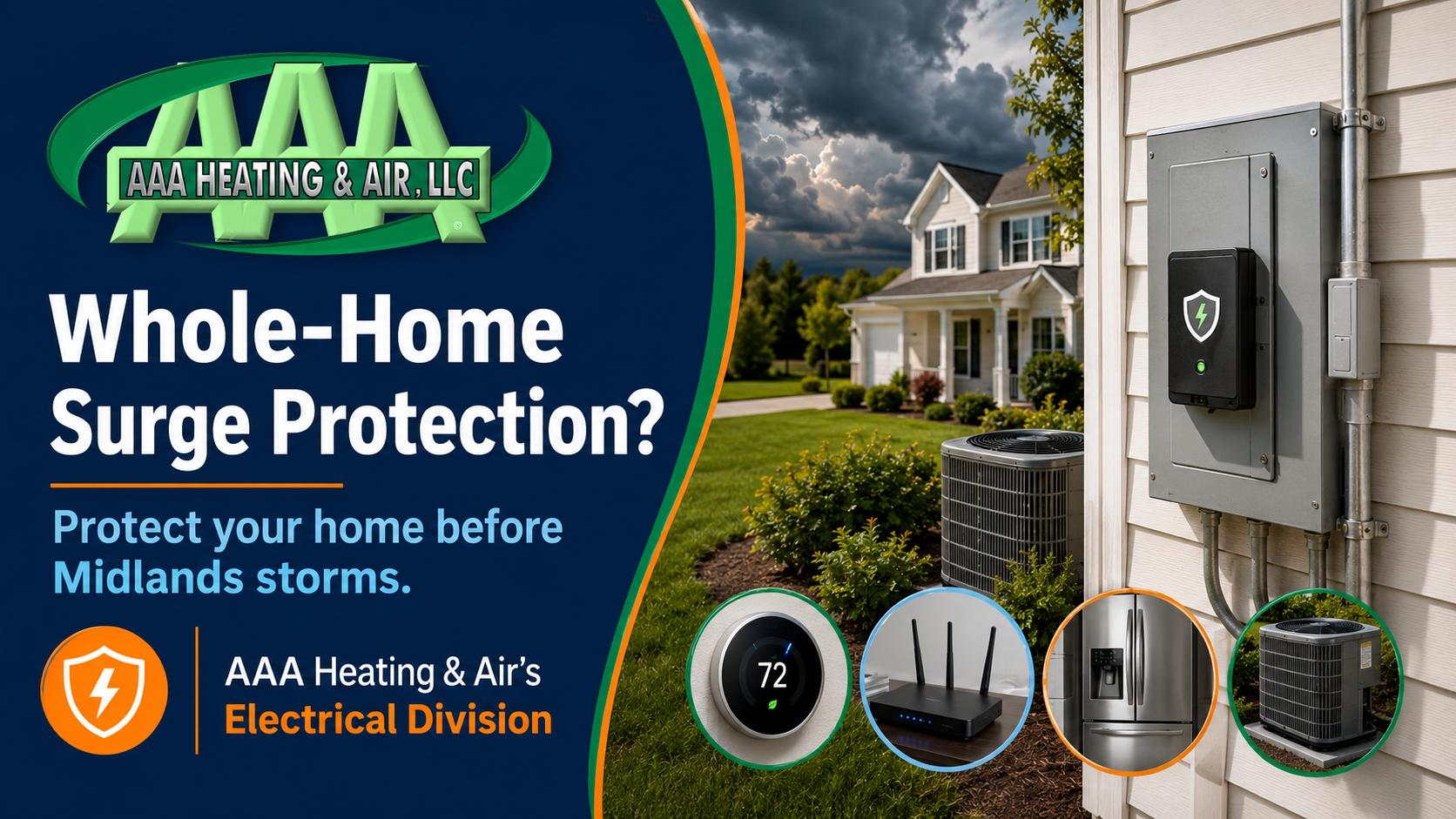
Electrical Division • Surge Protection • Midlands Storm Safety
Do You Need Whole-Home Surge Protection Before Midlands Storms?
Summer heat, utility demand, and afternoon thunderstorms can put expensive electronics, appliances, HVAC controls, and smart home equipment at risk from power surges.
Direct Answer
Whole-home surge protection is worth considering for Midlands homes exposed to frequent thunderstorms, power flickers, or outages, especially those with sensitive electronics, smart-home equipment, newer appliances, HVAC controls, home-office equipment, or standby generators. Plug-in surge strips may protect individual devices, but they cannot replace a professionally installed whole-home surge protective device at the electrical panel. Call AAA Heating & Air’s Electrical Division to have your surge protection, panel condition, grounding, and overall electrical safety evaluated before storm activity intensifies.
AAA Heating & Air’s Electrical Division serves homeowners across the South Carolina Midlands, including Columbia, West Columbia, Lexington, Irmo, Chapin, Cayce, Gilbert, and nearby approved service-area communities.
Why This Matters Right Now in the Midlands
Late July in the South Carolina Midlands brings a specific combination of home electrical stress: high air-conditioning demand, plugged-in dehumidifiers, refrigerators working harder, pool equipment, chargers, home office electronics, smart devices, and the return of weekend thunderstorm chances.
As of July 30, 2026, local weather conditions in Columbia and West Columbia are sunny and hot, with forecast highs in the 90s. The National Weather Service Columbia forecast shows thunderstorm chances increasing over the weekend. That combination makes this a practical time for homeowners to think about surge protection, not after electronics or HVAC controls have already been damaged.
A power surge is a sudden increase in voltage. Surges can come from outside the home, such as utility activity, power restoration after an outage, or nearby lightning. They can also come from inside the home when larger equipment turns on and off. The concern is not only one dramatic lightning strike. Repeated smaller surges can also wear down sensitive electronics over time.
Current Weather and Research Context
This article was prepared for publication after reviewing July 30, 2026 weather conditions and forecast trends for Columbia, West Columbia, and the South Carolina Midlands. Current local conditions are hot and sunny, while weekend rain and thunderstorm chances increase. Electrical safety references include the National Weather Service, the U.S. Department of Energy, and the Electrical Safety Foundation International.
What Whole-Home Surge Protection Actually Does
A whole-home surge protective device is installed at or near the electrical panel to help reduce damaging voltage spikes before they spread through branch circuits. It is not the same thing as a basic power strip plugged into a wall outlet.
Think of surge protection in layers. Whole-home surge protection helps protect the electrical system at the panel level. Point-of-use surge protectors can add another layer for individual electronics such as computers, televisions, routers, gaming systems, and office equipment. Neither option makes a home immune from every possible surge, and no surge protection device should be treated as protection from a direct lightning strike.
The value is risk reduction. In a storm-prone area like the Midlands, that risk reduction can matter when a home depends on electronics, smart thermostats, communicating HVAC equipment, garage door openers, security systems, refrigerators, washers, dryers, and home office devices.
1. Storm-related surges
Lightning and storm activity can create voltage disturbances that may enter through power, cable, communication, or utility lines.
2. Power restoration surges
When power returns after an outage, sensitive electronics and appliances can be exposed to sudden voltage changes.
3. Internal equipment cycling
Large home equipment turning on and off can create smaller surges that may gradually stress electronics and controls.
4. Sensitive modern devices
Smart thermostats, appliances, Wi-Fi equipment, security devices, and modern HVAC controls rely on electronics that can be vulnerable to surges.
Why Power Strips Are Not Enough
One of the most common homeowner questions is whether a power strip is the same as surge protection. It is not. Some power strips include surge protection, but many do not. A basic power strip mainly gives you more plug-in locations. It does not automatically protect the home from voltage spikes.
Even a plug-in surge protector is limited. It protects only what is plugged into it, and it must be used correctly. It should not be overloaded, daisy-chained, hidden under rugs, used with damaged cords, or treated as a permanent solution for high-demand appliances.
For homeowners with expensive electronics, home office equipment, smart home systems, and HVAC controls, whole-home surge protection may provide a stronger first layer of protection at the electrical panel. Plug-in surge protectors can still be useful as a second layer for sensitive devices.
Concerned about storms and power surges?
AAA Heating & Air’s Electrical Division can review your electrical panel, surge protection needs, grounding concerns, generator readiness, and safe residential electrical options.
Signs Your Home May Need Better Surge Protection
Not every power flicker means a major electrical problem, but repeated symptoms deserve attention. If the same problems show up during storms, after outages, or when high-demand equipment starts, your home may need a closer electrical evaluation.
Lights flicker during storms or when equipment starts
Brief flickers can happen in some homes when large loads start, but repeated flickering, widespread flickering, or flickering paired with buzzing, heat, breaker trips, or power loss should be checked.
Electronics reset or fail after storms
If routers, televisions, computers, smart thermostats, garage controls, or appliances reset or fail after a storm, a power disturbance may be part of the story.
Breakers trip during heavy electrical demand
Summer load can expose weak points in older electrical systems. Air conditioning, kitchen appliances, laundry equipment, pool pumps, chargers, and home office equipment can all add demand.
Outlets, switches, or panel areas feel warm
Warm outlets, warm switches, buzzing, burning smells, scorch marks, or crackling sounds are warning signs. Stop using the affected area and call for residential electrical service.
Your panel is older or already crowded
Older panels may not be set up for today’s electrical usage. If your home has added appliances, HVAC upgrades, home office equipment, generator needs, or EV charging plans, the panel should be evaluated before more load is added.
Safe Homeowner Checks Before the Next Storm
These are safe visual and practical checks. Do not remove electrical panel covers, open outlets, touch wiring, bypass breakers, install surge devices yourself, or work near electrical equipment in wet conditions.
- Confirm that important electronics are plugged into real surge protectors, not basic power strips.
- Look for a UL marking and surge-protection labeling on plug-in protection devices.
- Unplug valuable electronics before a nearby thunderstorm when it is safe to do so before the storm arrives.
- Do not plug portable air conditioners, refrigerators, dehumidifiers, microwaves, or other high-demand appliances into extension cords.
- Check whether any outlets, switches, cords, or plug-in strips feel warm or look discolored.
- Write down whether power flickers happen during storms, when the AC starts, or when multiple appliances run.
- Keep outdoor electrical items, extension cords, and connected equipment away from standing water.
- Call for service if the same breaker trips repeatedly, if the panel buzzes, or if you smell burning near electrical equipment.
What Not to Do During Storm Season
Do not treat surge protection as a do-it-yourself panel project. Whole-home surge protection is installed at the electrical panel and should be handled by a qualified electrical professional. Panel work can expose homeowners to serious shock, burn, fire, and equipment-damage risks.
Do not keep resetting a breaker that trips after storms or when heavy equipment starts. A breaker is a safety device. If it trips repeatedly, something needs attention.
Do not assume that turning off a power strip fully protects plugged-in electronics. If lightning is nearby, the safest time to unplug sensitive electronics is before the storm arrives. Once a storm is overhead, stay away from outlets, cords, and electrical equipment.
Schedule Service
Use the service request form when you need electrical help with surge protection, panels, breakers, outlets, switches, storm-related concerns, or generator readiness.
Standby Generators
If storm outages are part of your concern, backup power planning may be worth discussing before the next severe weather pattern arrives.
Financing Options
For larger electrical repairs, panel upgrades, generator planning, or whole-home protection projects, ask about current financing options.
How AAA Heating & Air’s Electrical Division Can Help
AAA Heating & Air’s Electrical Division can evaluate whether whole-home surge protection makes sense for your home. A service visit may include reviewing your panel area, discussing your sensitive electronics and appliance concerns, checking visible warning signs, and explaining appropriate next steps.
The goal is not to sell fear. The goal is to help Midlands homeowners make a practical decision before a summer storm or power event causes damage. If your home depends on HVAC controls, home office equipment, internet equipment, security devices, kitchen appliances, medical equipment, or smart home technology, surge protection deserves a serious conversation.
If you have also noticed flickering lights, buzzing, warm outlets, tripping breakers, storm-related power loss, or repeated equipment failures, mention those symptoms when you schedule service. They can help the Electrical Division understand what needs to be evaluated.
Frequently Asked Questions
Do I need whole-home surge protection in South Carolina?
It is worth considering because South Carolina homes often deal with thunderstorms, lightning, outages, power flickers, high summer electrical demand, and sensitive electronics. A professional can help determine whether it is appropriate for your home.
Is a power strip the same as a surge protector?
No. A basic power strip mainly provides more outlets. A surge protector is designed to help reduce voltage spikes. Homeowners should check labels carefully and avoid assuming every plug-in strip provides surge protection.
Can a power surge damage my HVAC system?
Yes. Modern HVAC systems can include control boards, communicating thermostats, motors, sensors, and other electronic components. Surge protection may help reduce risk, but it does not make equipment immune from every possible electrical event.
Should I unplug electronics during a thunderstorm?
When it is safe to do so before the storm arrives, unplugging sensitive electronics can reduce risk. Once lightning is nearby, stay away from outlets, cords, and electrical equipment.
Can I install whole-home surge protection myself?
No. Whole-home surge protection involves electrical panel work and should be installed by a qualified electrical professional. Do not remove panel covers or attempt panel wiring yourself.
When should I call AAA Heating & Air’s Electrical Division?
Call if you want whole-home surge protection reviewed, your home has repeated power flickers, electronics have failed after storms, breakers trip, outlets feel warm, the panel buzzes, or you want storm-ready electrical options before the next outage.
Weather and Safety Sources
Weather and safety guidance can change, especially during summer storm season. Homeowners should continue checking current official weather alerts and should use qualified electrical help for panel, surge protection, wiring, or breaker concerns.
Final Recommendation
Protect the home before the storm, not after the damage.
If your home depends on sensitive electronics, smart devices, HVAC controls, appliances, home office equipment, or generator readiness, now is the time to ask whether whole-home surge protection makes sense.